
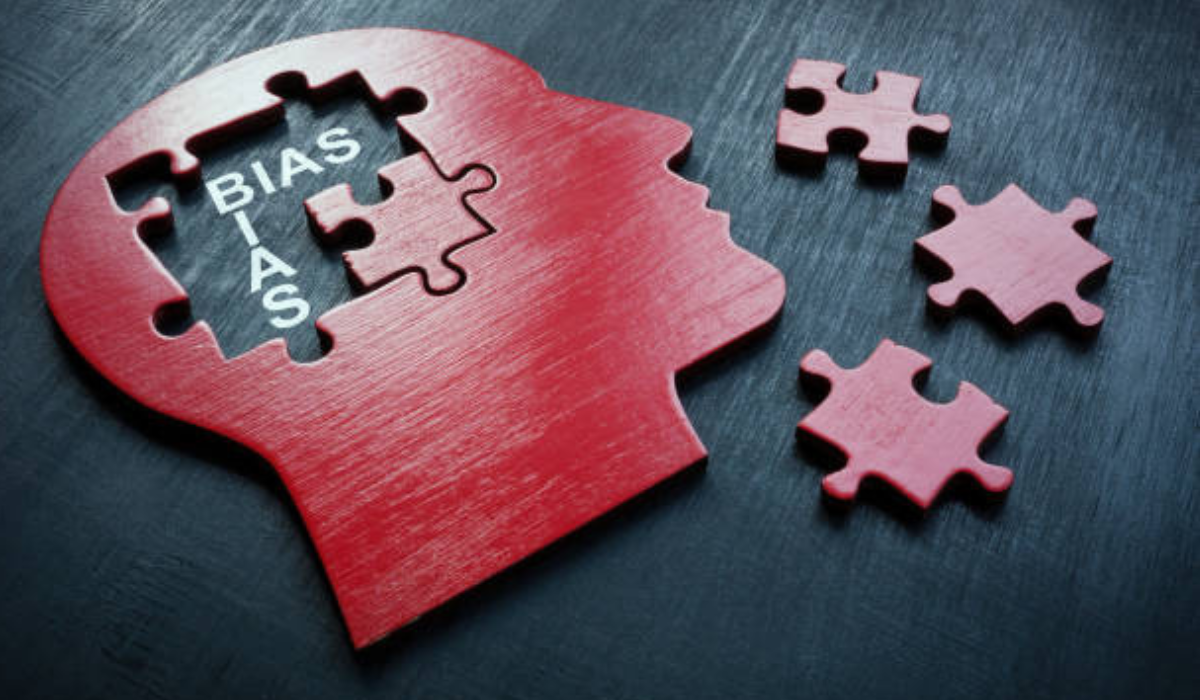
Artificial intelligence (AI) is transforming the way we work, communicate, and make decisions. From the assistant that recommends a movie to systems that help diagnose diseases, AI promises a more efficient future. However, we often tend to think of this technology as a cold, logical, and, above all, objective tool.
Nothing could be further from the truth. AI, rather than being an impartial judge, often acts as a mirror of the society that created it, reflecting and, at times, amplifying our own prejudices.
At Datasketch, where we work with data daily, we understand that information is rarely neutral. For that reason, we’ll explain how AI models are built and how to understand their biases.
How Does an Artificial Intelligence “Learn”?
Far from being a magical consciousness, most AIs (especially language models like ChatGPT or recognition systems) “learn” much like a student preparing for an exam by studying thousands of books.
These “books” are massive datasets: text extracted from the internet, millions of images, historical records, statistics, etc. The AI doesn’t “understand” this information like a human; what it does is identify statistical patterns. It learns that the word “dog” is often near “bark,” or that certain patterns in an image usually correspond to the label “cat.”
The problem arises when the “books” we give it to study are incomplete, wrong, or, more commonly, reflect humanity’s historical biases.
1. Bias in the Data
This is the most common bias. If the training data is biased, the AI’s output will be too.
Let’s think about an AI system trained to help with hiring processes. If it is fed a company’s hiring history from the last 50 years, that data will likely reflect an era when men held most managerial and technical positions. The AI will learn that pattern and could statistically conclude that men are “better” candidates for those roles, penalizing resumes with characteristics associated with women.
The AI isn’t “sexist” in itself; it is simply reproducing the biased historical pattern we taught it.
2. Human Bias: The Developer’s Decisions
This is where bias becomes intentional, or at least, a direct consequence of the tool’s conception. Developers make crucial decisions: What data do we include? What data do we exclude? And for what purpose?
A perfect example is Grok from xAI. This AI was conceived from its inception to have a “witty” and “rebellious” personality. To achieve this, its creators made the human decision to feed it primarily with real-time data from the social network X (formerly Twitter).
This is not a neutral technical decision; it is an editorial decision. By deliberately choosing a data source known for its polarization, immediacy, and sarcasm, the developers are embedding a design bias from the very beginning.
The tool doesn’t just reflect the biases of the data (as we saw in point 1); it was designed to adopt a specific personality based on them. The bias, in this case, is not an accident to be corrected; it is a design feature.
Understanding AI bias is not just a technical task—it’s also an ethical and social one. Every model we use—from a recommendation system to a predictive analytics tool—makes decisions based on data that comes from specific contexts, each with its own history and inequalities. That’s why, instead of asking whether AI is “good” or “bad,” we should be asking who built it, with what data, and for whom it was designed. Only then can we recognize its limits and use it responsibly, intentionally, and in ways that are truly useful for our communities.
To close: an invitation to keep learning
If you’re interested in diving deeper into how artificial intelligence works, its risks, its potential, and the role data plays in all of this, we invite you to explore more AI-related content on our blog. At Datasketch, we continue creating resources, analysis, and tools so that anyone—regardless of technical background—can better understand and make meaningful use of these technologies. We look forward to continuing the conversation and learning together.
